When should you take sustainability seriously? Climate, health, well-being, responsibility, community and a healthy economy in your own business. For some it starts with a light bulb. For others, with a climate-friendly website. Someone has to sow a little seed.
It is easy to feel small in the face of the world’s challenges. But when more of us take small, well-chosen steps, something important and right happens. Sustainability is about more than climate – it is about health, well-being, responsibility, community and a healthy economy in your own business.
Sustainable business
We have now committed Hallingcast AS to a sustainable path. We have become an Eco-Lighthouse. It may seem insignificant that one small company takes steps towards a more sustainable everyday life – what role does one play in the big game – an adjusted routine here, a new policy there – in the face of the enormous challenges ahead of us?
That is exactly how change starts. Not with big, noisy campaigns, but with many small, concrete actions pulling in the right direction.
The Eco-Lighthouse certification is about more than climate and the environment in isolation. It is about health and safety. It is about well-being at work and an inclusive working environment. It is about making conscious choices – taking responsibility – for what is purchased and when, who supplies it, and what values are built in the local community we are part of.
You notice it in the small things. A glaring light bulb at the office becomes a question of well-being and working environment. A safety inspection opens your eyes to guest satisfaction. A conversation with the IT manager confirms that the data centre hosting the websites runs on 95% renewable hydropower, and is cooled with clean water that can be reused at the other end, because it is free of toxic chemicals.
A seed has been sown
The IT industry now accounts for as large a share of global carbon emissions as the aviation industry – and requirements for emissions reporting will soon arrive, for digital solutions too.
A little seed has been sown in our digital flower pot. Websites can in fact be made climate-friendly through efficient use of resources, clean structure, optimised images and conscious choices about code and design. Fonts embedded instead of downloaded, images in webp format, darker colours that use less power. Small tufts can tip big loads.
As part of the certification process we landed on exactly this – Frö – which will be one of several products we deliver to businesses with environmentally conscious and innovative leaders. The first website on this solution has already been delivered, for Sentrumsparken Ål. See sentrumsparkenaal.no.
The maths
According to the Website Carbon Rating System, the global average for website emissions is roughly 1.76 grams of CO₂ per page view. That means an ordinary website with 100,000 views a year emits around 176 kg of CO₂. For comparison: a one-way flight between Oslo and Bangkok in economy class emits roughly 1,150 kg of CO₂ per passenger, according to Myclimate.org.
Seven such websites with 100,000 views a year add up to about 1,232 kg of CO₂ – actually a bit more than one long-haul flight. An optimised Frö website – which can get as low as 0.09 grams of CO₂ per view – produces a total of just 9 kg of CO₂ for the same amount of traffic.
That is a saving of 167 kg of CO₂ – almost a seventh of the emissions from an Oslo–Bangkok trip, or roughly one seat on a domestic flight between Oslo and Bergen on an Airbus A320.
It puts things in perspective.
Efficient code, minimalist design and sustainable hosting actually make a difference.
Most pages on this site emit 0.13g of CO2 per view – 87% better than average. Even the apartment selector, made up of 64 image files, is 14% better than average. The Frö brand is discreetly marked in the footer, alongside the measurements from the Green Web Foundation.
✄ - - - - - -
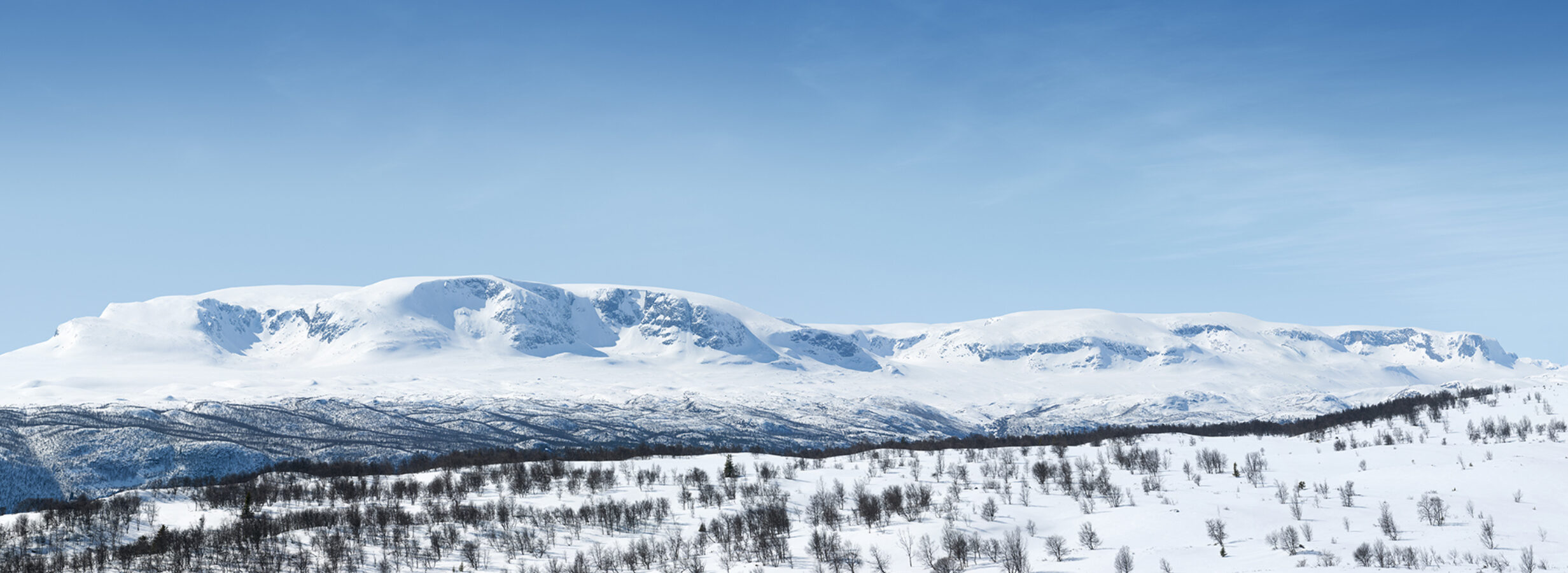
The photo at the top was taken with a sharp telephoto lens and stitched together from 31 images. The level of detail is so high that you can see ski tracks from the summit down the north-east side, and you can count the lift towers in Hallingskarvet Ski Centre to the north-west. The photo has become a bestseller.