
LIDAR scanning
We walk through and around your building with a laser scanner and a drone. The result is a «digital twin»: a digital tour that plays in the browser, and a data model accurate to the centimetre.
See the demo we made for Hol Gamle KyrkjeHow it works
The scanner emits laser pulses and measures the distance to everything it hits. Accuracy is one to two centimetres per ten metres, which means an architect can extract CAD files and design directly on the model instead of travelling out to measure again. The same model can be used in VR.
360 tour
What people notice first is the tour. You navigate with mouse or keyboard, move from room to room, and see the building as if you were standing there.
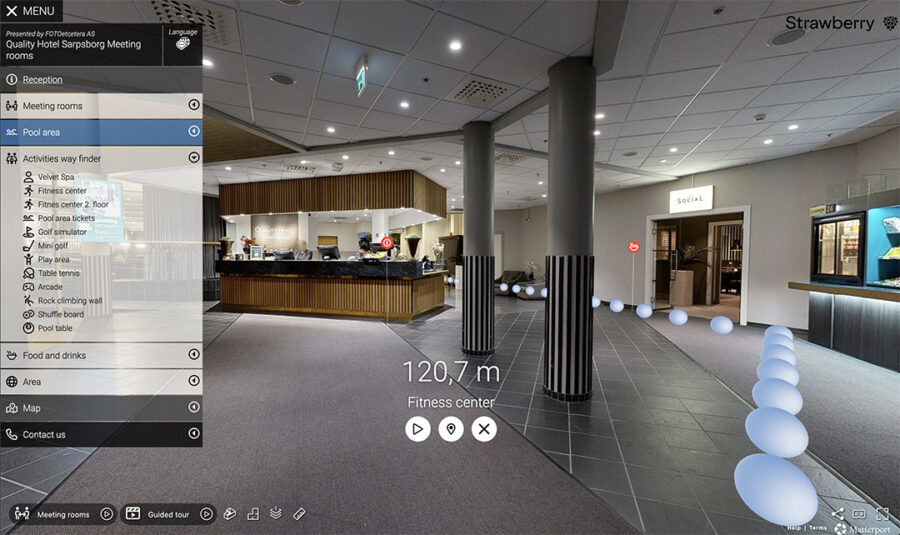
Quality Hotel Sarpsborg gets up to a thousand views per week of its model. They send the link in the welcome email, and guests have found the meeting room before they have packed their suitcase.
For cultural heritage, the scan is the insurance
When Notre-Dame burned in 2019, a laser scan of the cathedral already existed. It became one of the foundations for the reconstruction. A building that has been scanned is a building that can be recreated down to the smallest detail.
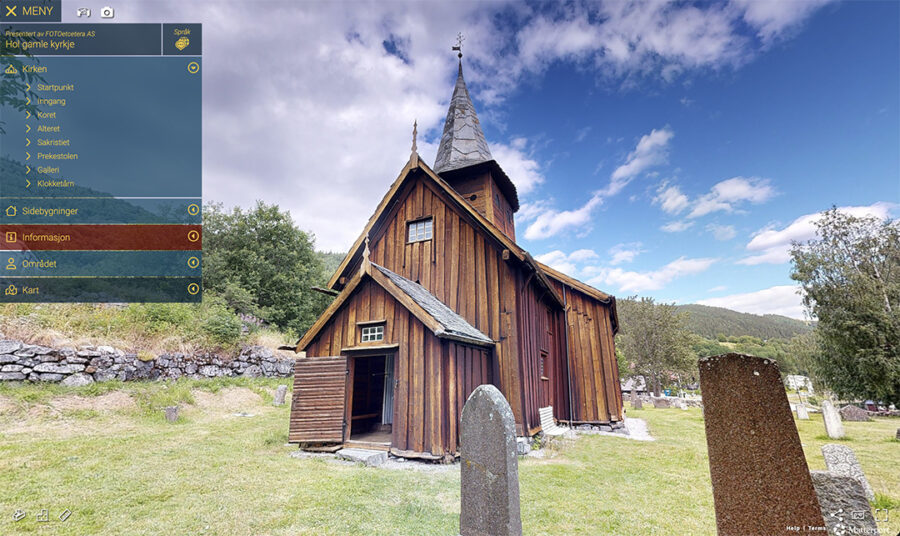
Hol old church here in Hallingdal has been scanned. The model is published on the church’s own website, and visitors who arrive outside the guide’s opening hours can scan a QR code and take the tour themselves. The building is open around the clock, all year – also for those who never make it to Hallingdal (a sad thought).
Just a few weeks after the scan, the parish council in Hol had already recouped the cost of the model – contractors carrying out repairs and maintenance took their measurements from the office (or was it the sofa?) instead of driving for miles to take a measurement or five.
Who uses it
Municipalities, museums and property managers documenting and preserving. Hotels, conference venues and landlords selling rooms people have not seen. Contractors and architects who need precise measurements before demolishing or building. Industry documenting facilities as they actually stand. The public can get access through websites and QR codes.
See a living example: explore the 3D model of Hol old church – a digital twin you can move around in, directly in the browser. See also: Quality Hotel™ Sarpsborg – iSarpsborg – Aspmyra, home ground of Bodø/Glimt