
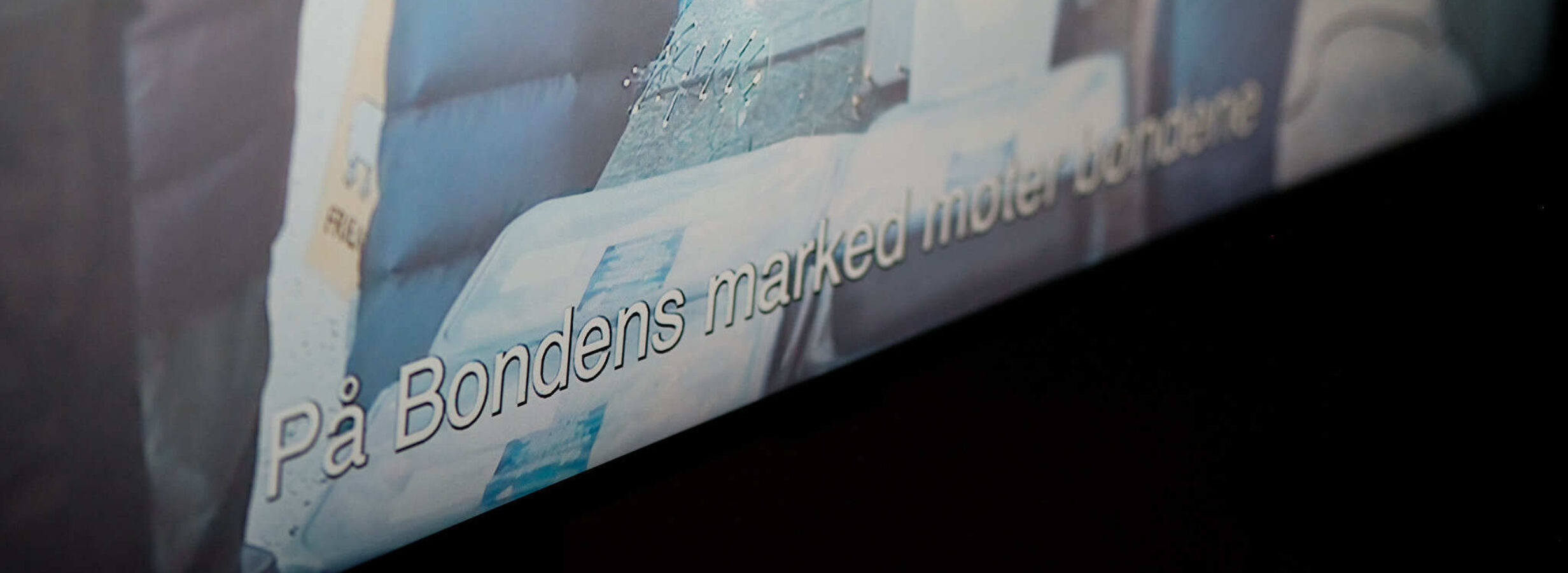
During 2025 it becomes a requirement that organisations – both public and many private – must subtitle all film and audio content they publish. This is part of the EU Accessibility Act (EAA), which aims to secure equal rights for people with disabilities and make digital content accessible to everyone.
Let us take the less fun part first: during 2025 it becomes a requirement that organisations – both public and many private – must subtitle all film and audio content they publish. This is part of the EU Accessibility Act (EAA), which aims to secure equal rights for people with disabilities and make digital content accessible to everyone.
For public bodies this is already a legal requirement. From June 2025 it also applies to private businesses with more than 10 employees or a turnover above NOK 20 million. That means all pre-recorded audio and video content must be subtitled or have a text alternative that conveys the content. Breaches of the rules can lead to orders for rectification – and in the worst case daily fines.
Good practice
Subtitling is not just about following the law; it is also a very effective way to increase both accessibility and reach.
Five good reasons to subtitle your films:
Reach
Sometimes people watch videos without sound. For example in public spaces, or because the sound is off on social media. With subtitles, your message gets through regardless of the volume.
Accessibility
People with hearing impairments and other disabilities can easily access your content when it is subtitled. Subtitles are also practical for anyone who prefers to read, or who struggles with accents or complex language.
Visibility
Search engines like Google are good at indexing text. With transcripts and subtitles, the chances increase that your content is picked up by new audiences. Technically, the recommended formats are:
WebVTT: Makes the text searchable and copyable on websites (like the film on our front page).
SRT: Often used on YouTube and Vimeo, where subtitles can be switched on and off.
Burned captions: The text is «burned into» the video file – ideal for screen use in places that have a Hallingcaster Aktivert✓ (our digital signage platform).
Room for improvement
Subtitling gives you the chance to adjust phrasings, correct slips of the tongue and make the message even clearer. This creates a better experience for the viewer and helps you get your points across clearly.
Flexibility and reuse
Once your film is subtitled, you can also use the transcript as the basis for blog posts, talks or even books.
Local food as an example The film we made for Vats Gardsmat lives on social media and YouTube. Via a QR code (leading to vatsgardsmatfilm.no) it is also easily available from the product packaging. Those who scan the code or watch the film on social media can follow the content without sound – because it is subtitled – whether they are at home or on the metro back from the farmers’ market. The film about Vats Gardsmat (23 minutes) can be watched in full on Hallingcaster Aktivert✓ – placed, among other spots, in the café at Samhald. Moving images and a message that lands, even without sound.
The benefits are many
Subtitling and transcription are required by law, but they are also an opportunity to extend reach and engagement. The upsides are clear:
- Better accessibility.
- Increased visibility and searchability.
- An easy way to reach international audiences.
A little PS at the end:
Hallingcast AS delivers professional presentation films for businesses. We have also written an article about how sound and music can strengthen a brand. We – like you – prefer films to be watched with sound. We do not “time” rhythm and tone in post-production just for fun, either 😆
All films we produce are published on our digital signage product, Hallingcaster Aktivert✓, in addition to our YouTube channel and Vimeo, unless we agree otherwise.
Contact us if you would like a presentation film for your business.