After a few days in Vågå in January, I found myself thinking about quality. In a business context: why it is worth spending time on a seemingly slow process, in order to work more efficiently digitally – and thereby raise the quality of our products.
After a few days in Vågå in January 2025, I found myself thinking about quality.
In a business context: why it is worth spending time on a seemingly slow process, in order to work more efficiently digitally – and thereby raise the quality of our products.
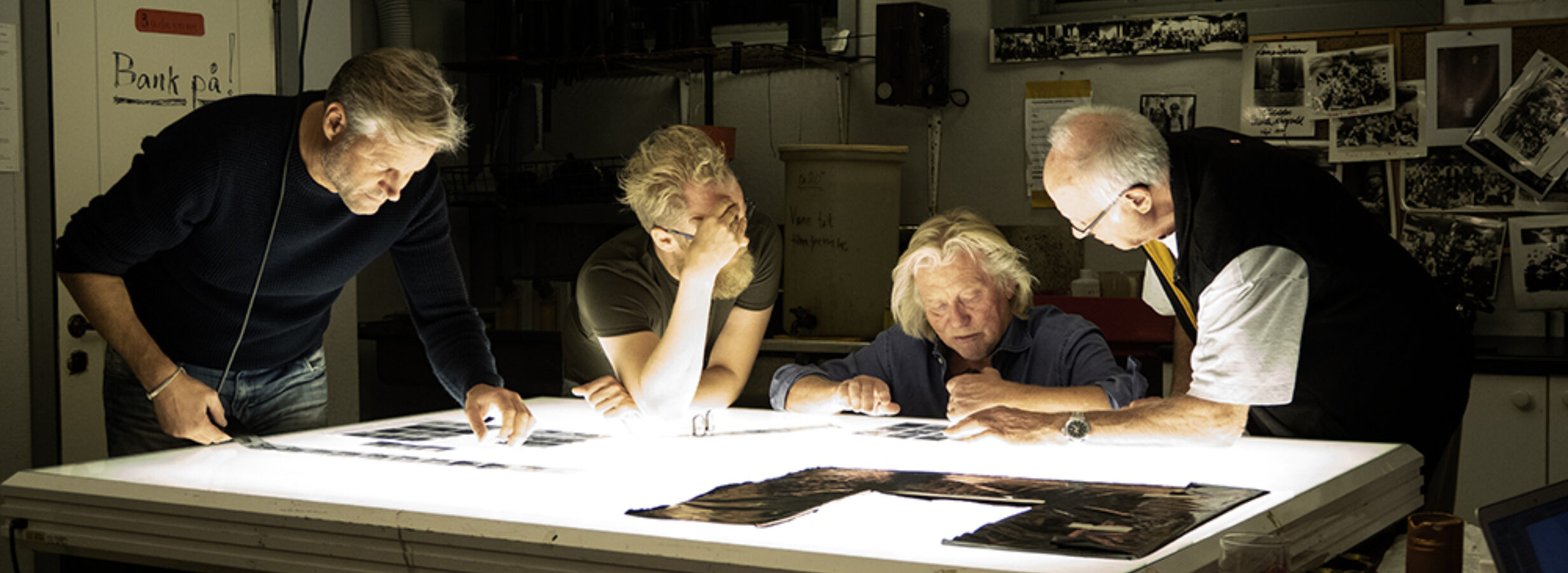
Morten Krogvold has run workshops in Vågå since 1989, and 35 years on we stand at a crossroads in the art of photography. Machine learning and technology are fun, but more and more people are returning to the roots of the photographic craft. Because it is a craft – and unquestionably real.
The value of an analogue process
Sales of analogue film have risen sharply. Even the local shop Brye Foto & Musikk stocks fresh film and darkroom chemicals on its shelves. These days, more young people are taking an interest in analogue film and slow processes – why?
Most of them have a phone that takes pictures with heaps of megapixels and sends them to «the cloud» before you can say «memory card».
I think the rise in sales of analogue photo products has something to do with the calm and focus that working analogue brings. No model can demand to see the picture before the post-processing is done. Each exposure also has a cost, and taking pictures this way is a more deliberate process. From subject, to developing, chemical printing, drying, possibly toning, pressing and retouching.
This time in Vågå, Vidar Kringsjaa (Arkivprodukter AS) brought along a small part of his photo-historical collection, with originals of «carte de visite» and original silver prints from the 1800s. Carte de visite, by the way, is a patented size still used for today’s business cards and bank cards (54×89 mm). As a fun fact, since Hallingcast is a Fujifilm dealer, we can mention that this is the same size as prints from the INSTAX Mini.
We also got a demonstration of a camera from the 1800s.
Wet plate technique. Watch the film below:
Time
We are all busy with what we do. Time is money, as you know. What fascinates me is how often people demand quality while wanting it as cheap as possible.
I find it fascinating because it spans several disciplines, not just the visual or creative. Would you set up a portacabin as your office if you knew your customers expected you to work from modern premises? Personally, I would rather pay a little more if the quality translates into greater willingness to pay at the other end.
Calm focus
The working calm you get – alone or with others – in a darkroom is unbeatable. The rinse water trickles, good music is playing, and you work with your hands to develop the result. Mobile phones and other screens (sources of polluted light) are strictly forbidden.
The concept of the slow process is easy to adapt to reality – the digital world we live in. When I come in from a film or photo assignment, the door closes behind me and, inspired by the methods of the darkroom, I bring that calm with me. The phone stays on silent.
Reflection
Have you seen the film about Gunnar Sønsteby, No. 24? I wish I had seen it in the cinema instead of on Netflix. The story and dramaturgy are without doubt very good – so good that I wanted to watch the end credits. Unfortunately you almost have to wrestle the remote to finish a film with its credits on services like Netflix. The music the composer wrote for the credits reinforces the story and brings us back to everyday life at the right tempo.
The streaming services are terrified that you will do anything other than stay on the platform, and the quality of the film experience suffers. NRK and TV2 are no exceptions, with 30 and 16 seconds of margin, respectively, for credits before the next programme. I think this is a good example of how busy we are.
Show that your business delivers quality!
- Hire a photographer. Take professional photos of your employees instead of settling for a blurry, crooked phone snapshot taken in a hurry – are your employees not an important resource for the company?
- Tell your story with film. Let a small production company make a few good films about your business – do not hand this to a cheap shortcut just because you can.
- Invest in a website that speaks to your audience. Your website should reflect the company’s visual identity, not be based on a random template that ignores hard, painstaking work.
I am convinced that a few days in the darkroom were worth their weight in gold for my digital pursuits. What is certain is that I have found a good way to separate work from hobby – and that each strengthens the other.
Looking forward to hearing from you. Give it a “star throw” if you want more content like this.